
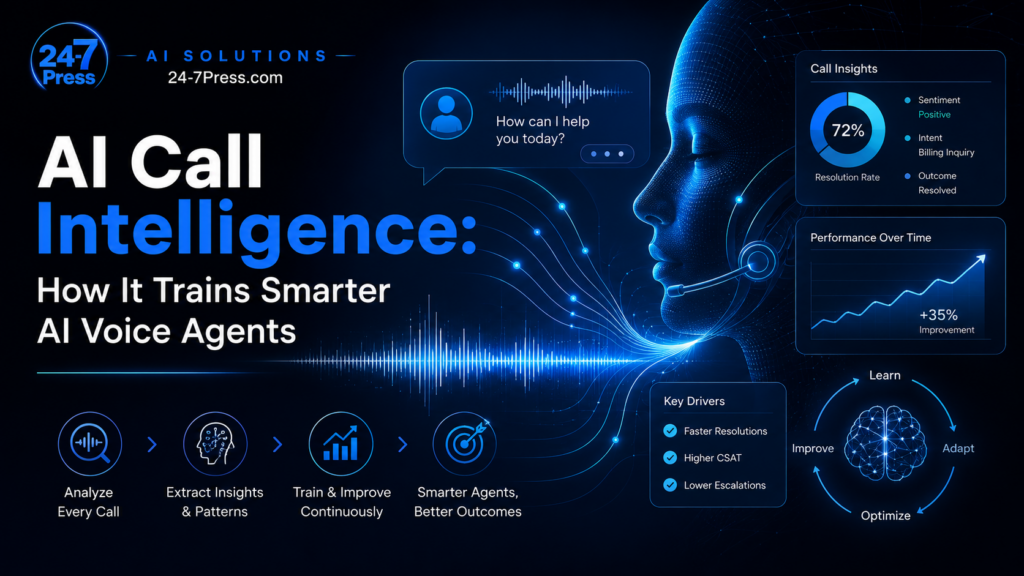
AI voice agents are only as effective as the data behind them. AI call intelligence provides that data by converting recorded conversations into structured performance information. Instead of guessing how a call went, you can see what worked, where the conversation stalled, and what should change next. That visibility turns every call into a training opportunity, so AI voice agents improve continuously instead of repeating the same mistakes.
What Is AI Call Intelligence?
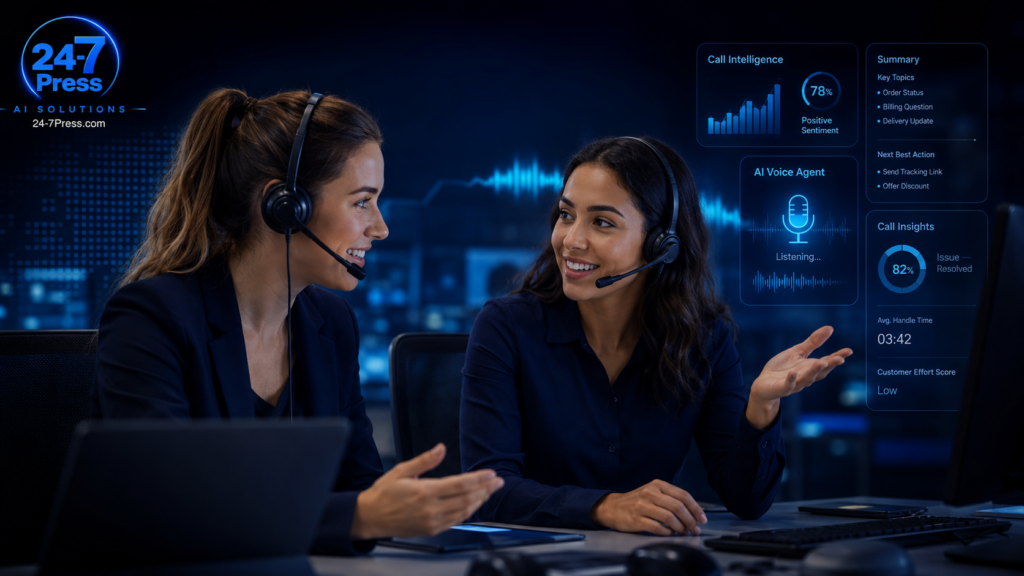
AI call intelligence uses speech to text and machine learning to analyze conversations between your team and customers. It automatically transcribes calls and applies natural language processing (NLP) to understand what was said and why it matters. Some call intelligence platforms record, transcribe, and analyze phone and video conversations, then activate insights directly in the tools teams already use. Others surface insights in real time, while the conversation is still happening.
The output is more than a transcript. It is a structured view of each call, organized around caller intent, sentiment, service requested, and outcome. That structure is what makes the data useful for training AI voice agents.
Why AI Voice Agents Need Structured Performance Data
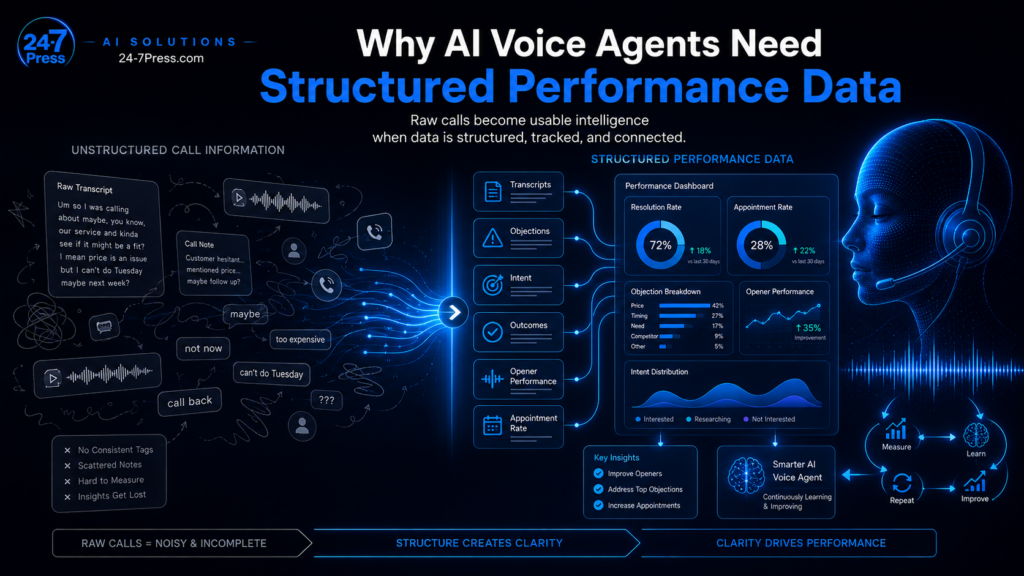
AI voice agents handle many conversations, but handling volume without visibility creates risk. If you do not know how each call performed, you cannot fix the ones that failed. Call intelligence platforms automatically listen to, analyze, and tag each call, turning conversations into marketing and sales intelligence. You can automatically tag calls by intent, service, or outcome, and you can track caller sentiment and conversation trends over time.
For an AI voice agent, this matters in two ways. First, it shows where the agent is losing callers. Second, it shows which behaviors produce successful outcomes. Both are needed to train a voice agent that improves over time.
How AI Call Intelligence Trains Better AI Voice Agents
The training loop works in three steps: observe performance, identify the pattern, and apply the fix. AI call intelligence supports every step.
See Where Calls Break Down
When every call is tagged by intent and outcome, breakdowns become visible. You can see whether a caller reached the right answer, booked a meeting, or left dissatisfied. Flags for unhappy callers help you catch problems early, and scoring features let you compare one call against another. For AI voice agents, this exposes the exact moment where a conversation goes off track, whether that is a misunderstood question, a weak response, or a missing next step.
Identify What Is Working
Call intelligence is not only about catching failures. It also reveals the responses and conversation flows that produce the best results. By reviewing calls that end in a scheduled booking or a positive sentiment score, you can identify the language and structure that resonate with callers. Those winning patterns become reference examples for training AI voice agents, so strong performance is repeated rather than accidental.
Turn Insights into the Next Improvement
The final step is action. In many call intelligence platforms, insights can be activated directly: automated follow-ups can be triggered, missed bookings can be recovered, and staff performance can be scored. For AI voice agents, those same insights become the basis for the next round of instruction and tuning. The agent learns from real call behavior, not from generic scripts.
From Conversation Data to a Continuous Training Loop
The most valuable part of AI call intelligence is the loop it creates. Each call produces structured data, that data produces insights, and those insights produce improvements. Platforms that analyze recorded calls for actionable insights help drive revenue growth and improve operational efficiency, because every conversation becomes a measurable input. This also frees your team to focus on conversations, not administrative work.
With a continuous loop in place, AI voice agents are no longer static. They improve based on real caller behavior, answering questions more accurately, handling objections more smoothly, and moving callers toward the desired outcome more often.
To see how this works in practice with a voice agent trained on your own website content, try the inbound AI voice demo. If your team is focused on reaching prospects, the outbound AI voice demo shows how the same approach applies to sales conversations.
What to Look For in a Call Intelligence Platform
Not every call intelligence tool is built for training AI voice agents. Look for capabilities that produce structured, actionable data:
- Automatic transcription using speech to text so every call is searchable and reviewable.
- Natural language processing and machine learning to identify intent, sentiment, and outcome without manual review.
- Automatic tagging by intent, service, or outcome so patterns are easy to spot.
- Real-time insights that surface important moments while the call is still live.
- Action features such as automated follow-ups, missed booking recovery, and performance scoring.
- Integration with the tools your team already uses so insights can be activated where work happens.
Frequently Asked Questions
What is AI call intelligence?
AI call intelligence uses speech to text, natural language processing, and machine learning to record, transcribe, and analyze phone conversations. It identifies caller intent, sentiment, and outcomes, then presents the findings as structured data. Teams use that data to improve sales performance, recover missed opportunities, and train AI voice agents based on real conversation behavior.
How does AI call intelligence help train AI voice agents?
AI call intelligence provides structured performance data from real conversations. It shows where calls break down, which responses work best, and how callers react to different conversation flows. When that data is fed back into an AI voice agent, the agent can be adjusted and retrained to repeat successful patterns and avoid the ones that cause callers to disengage.
What insights can AI call intelligence provide?
Call intelligence platforms can tag calls by intent, service, or outcome, track caller sentiment and conversation trends, flag unhappy callers, and score staff performance. Some platforms also detect missed bookings and automate follow-ups. Taken together, these insights reveal which parts of a conversation drive results and which parts need improvement, giving you a clear path for training AI voice agents.
Do I need to manually review every call?
No. AI call intelligence automatically transcribes and analyzes calls using machine learning and natural language processing. It flags the conversations and moments that need attention, such as unhappy callers or lost bookings. Manual review becomes a focused activity, applied only to the calls that matter, rather than a requirement for every interaction.
See AI Voice Agents in Action
AI call intelligence becomes more valuable when you can see how real voice agents handle actual conversations. Try our Inbound AI Voice Agent Demo to experience how an AI agent can answer questions, qualify callers, and guide prospects using business-specific information, or explore our Outbound AI Voice Agent Demo to see how AI can engage prospects, handle real sales conversations, and move qualified leads toward the next step.
Experience both demos and see how smarter conversations can lead to better business outcomes.